Yalla Haji
- client
- Yalla Haji
- role
- Design
- year
- 2025
- live
- visit
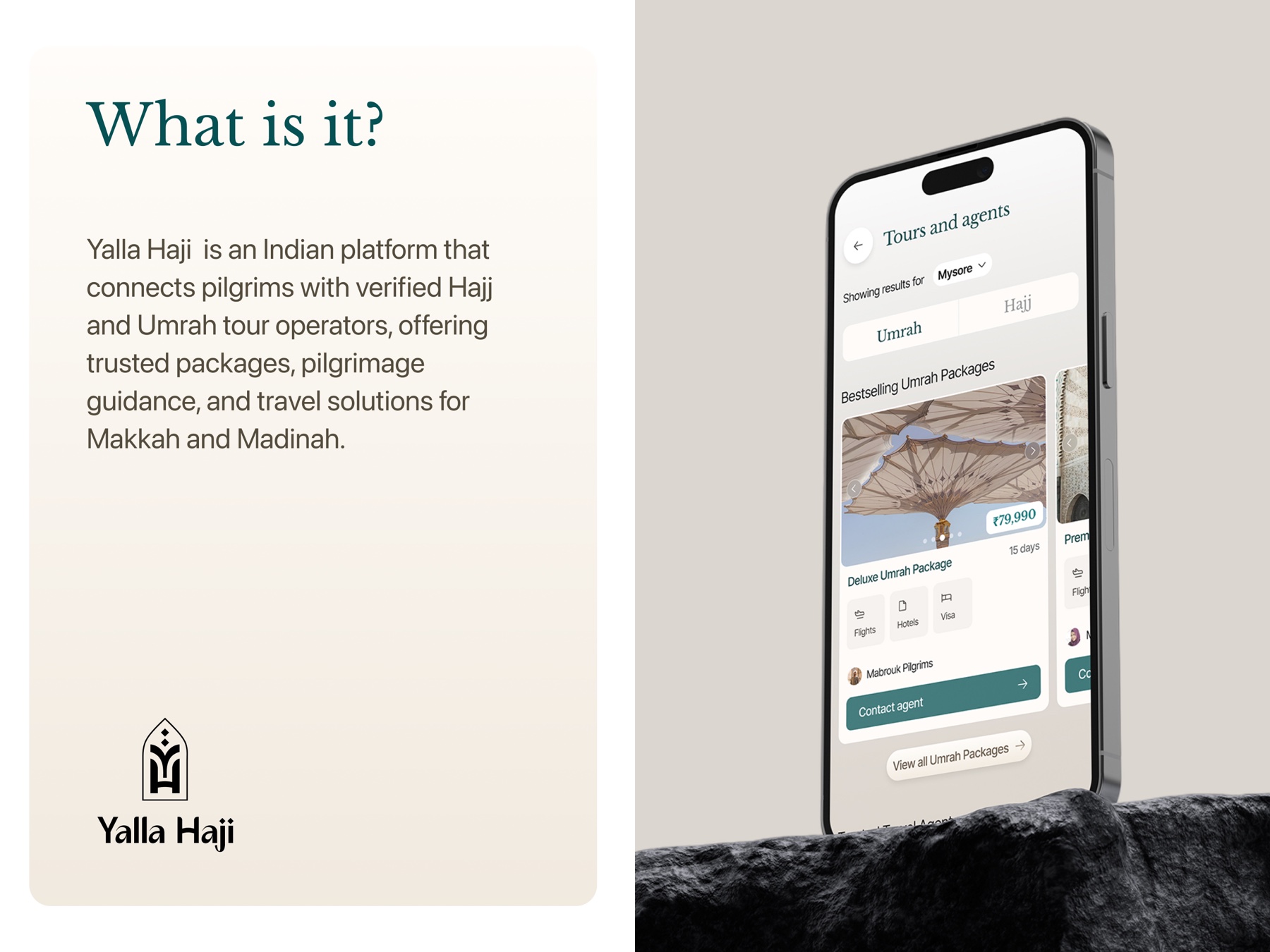
A verified Hajj and Umrah marketplace for Indian pilgrims: two connected apps, one for pilgrims and one for the operators they book with, plus the prayer, Qibla, and translation tools they need once they land.
context
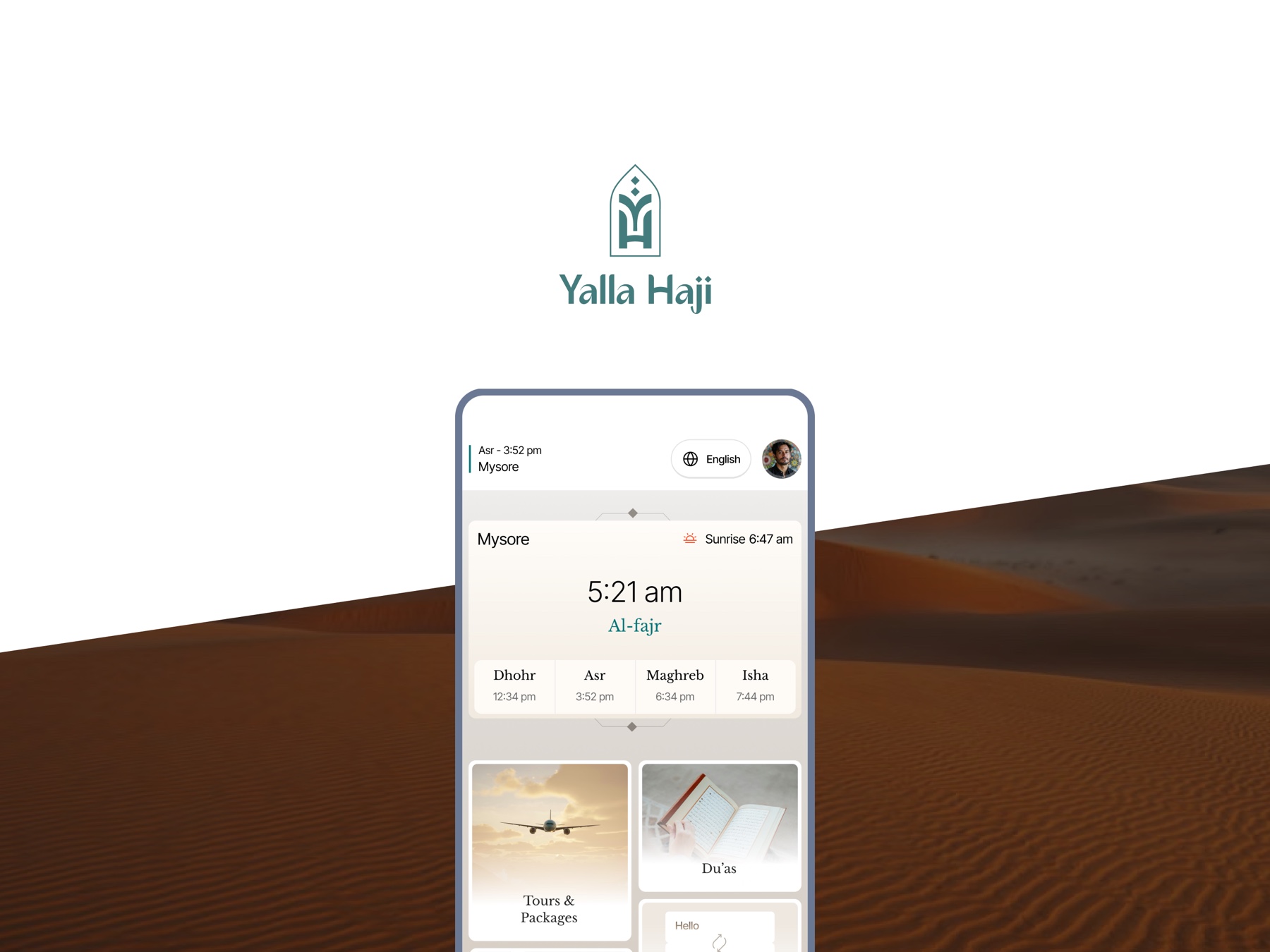
Yalla Haji is a verified Hajj and Umrah marketplace connecting Indian pilgrims with trusted tour operators, alongside prayer times, a live translator, Qibla direction, and the other tools a pilgrimage actually needs. It is live on iOS, Android, and the web. I joined as product designer and designed two connected experiences: the pilgrim app, and a separate app for verified operators to manage their listings.
The problem
Planning Hajj or Umrah from India means running a gauntlet of unverified agents, with no reliable way to tell a legitimate operator from someone who will take a deposit and disappear. It is often a once-in-a-lifetime trip paid for with years of savings, so the cost of trusting the wrong person is severe.
The trip itself has its own problems. Arabic signage and Arabic-speaking staff in Makkah and Madinah leave many pilgrims unable to ask for help, and prayer times, ritual guidance, and booking details are scattered across separate apps and paper handouts. Nothing held both halves of the journey.
Designing for two sides at once
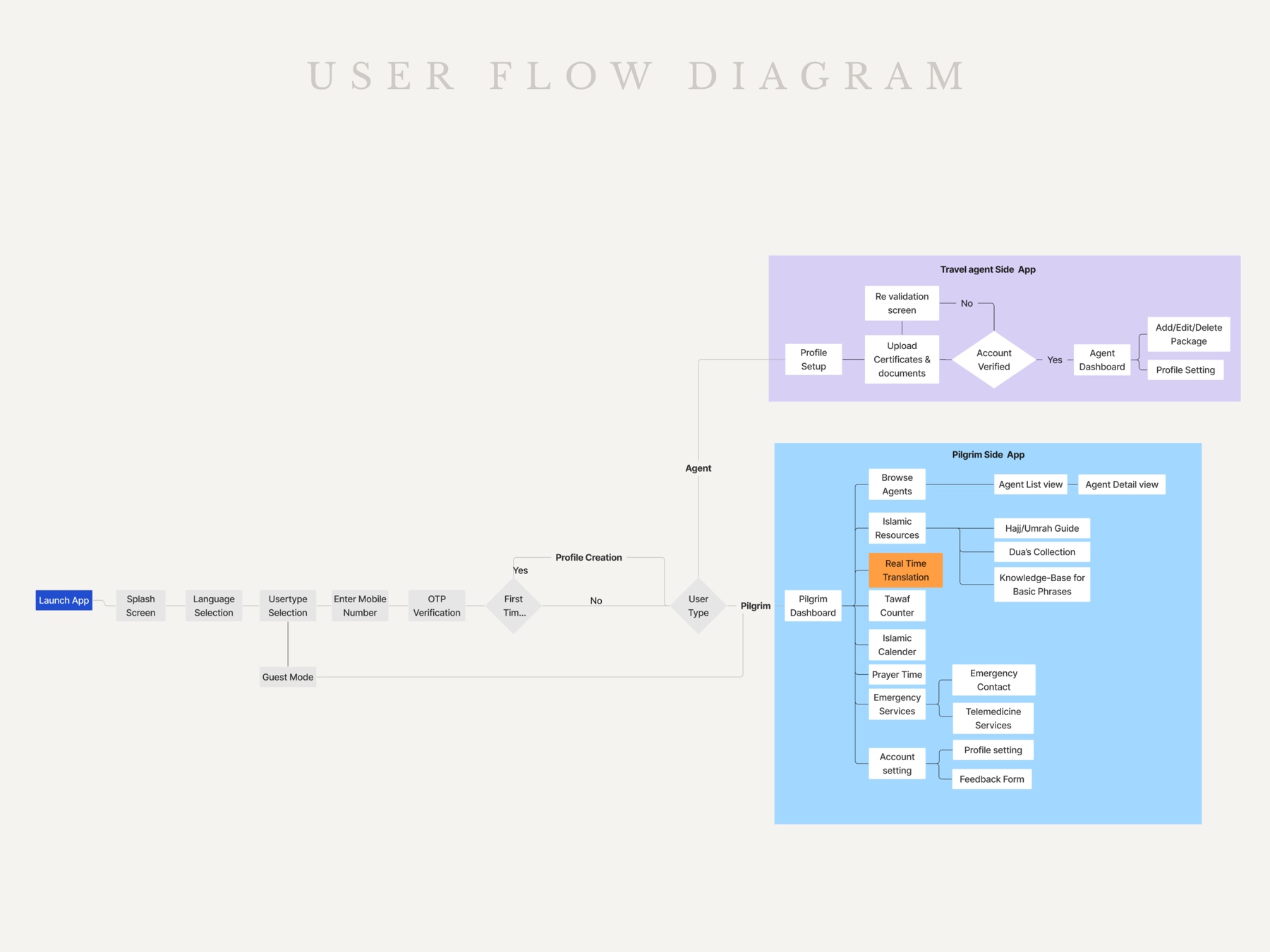
Trust in a marketplace is a two-sided design problem: pilgrims only believe the verified badge if verification is real, and operators only supply listings if managing them is quick. So I designed both apps against a single flow.
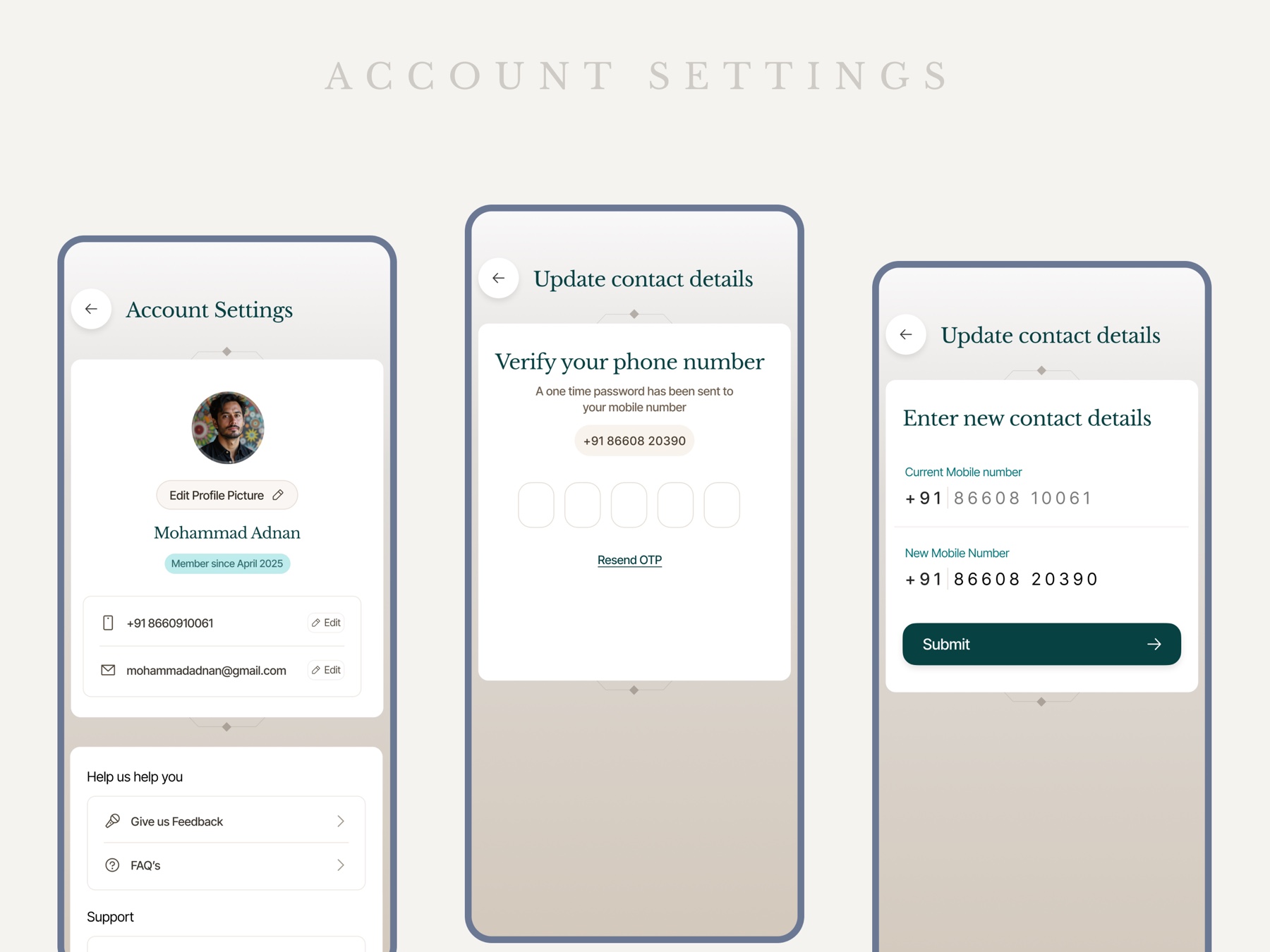
A shared entry path handles language choice, mobile number, and OTP, then forks by user type. Operators go through profile setup, document and certificate upload, and a verification gate before they can publish or edit a package. Pilgrims land straight on the dashboard, with a guest mode for anyone who wants to look before signing up.
Designing for a first-time pilgrim under stress
The design constraint that shaped every screen: assume a first-time pilgrim, in an unfamiliar country, possibly anxious, possibly not a confident reader of English or Arabic.
That meant large touch targets, minimal steps to anything urgent, and no buried navigation for the high-anxiety moments. Emergency contacts, telemedicine, and Qibla direction sit within reach of the dashboard rather than behind a settings menu, because those are the moments when a person cannot afford to hunt through an interface.
What is inside
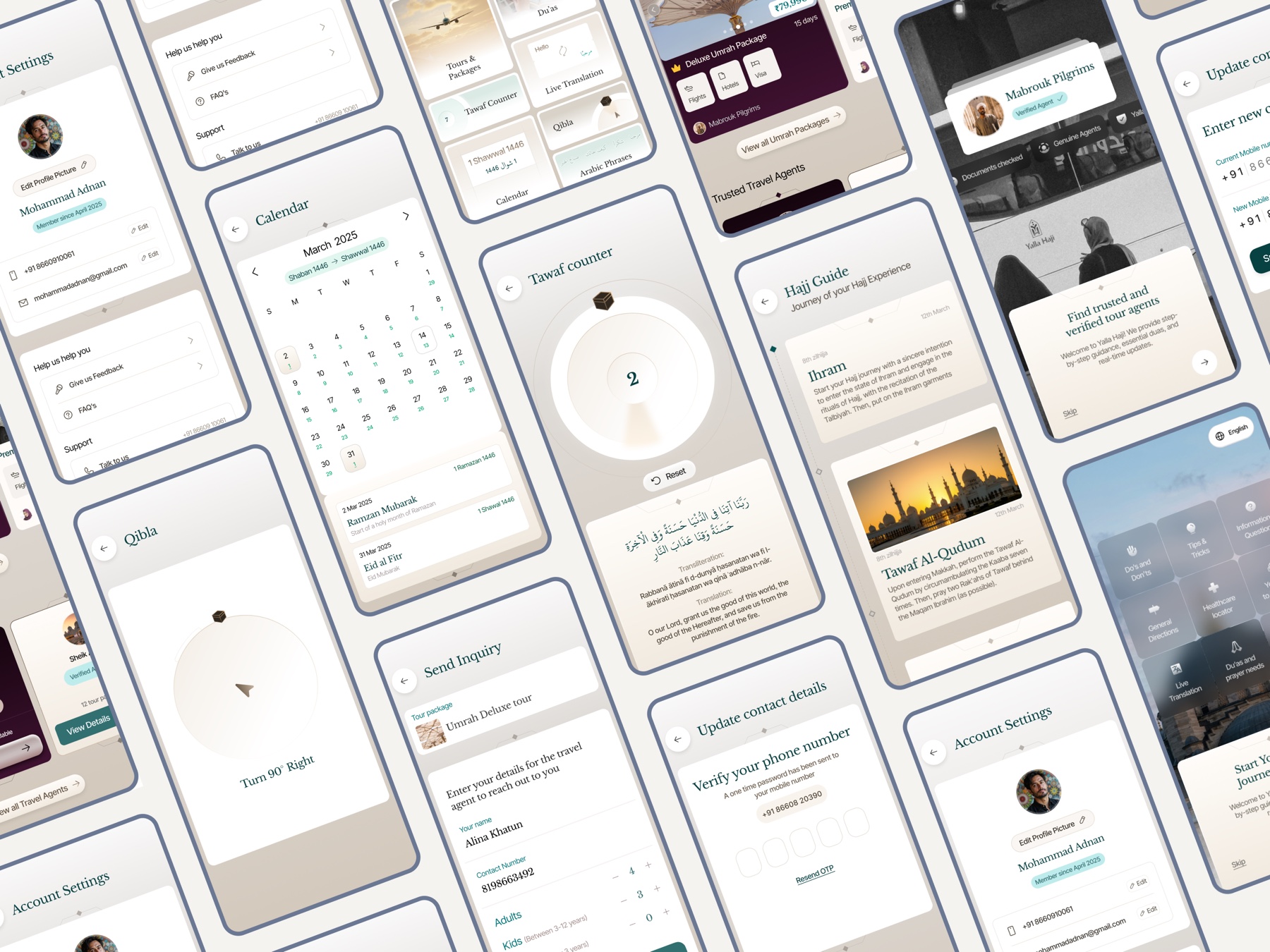
- Prayer times by live location, with the next prayer given the largest type on the screen
- Browse, compare, and contact verified Hajj and Umrah operators, with package inclusions shown up front
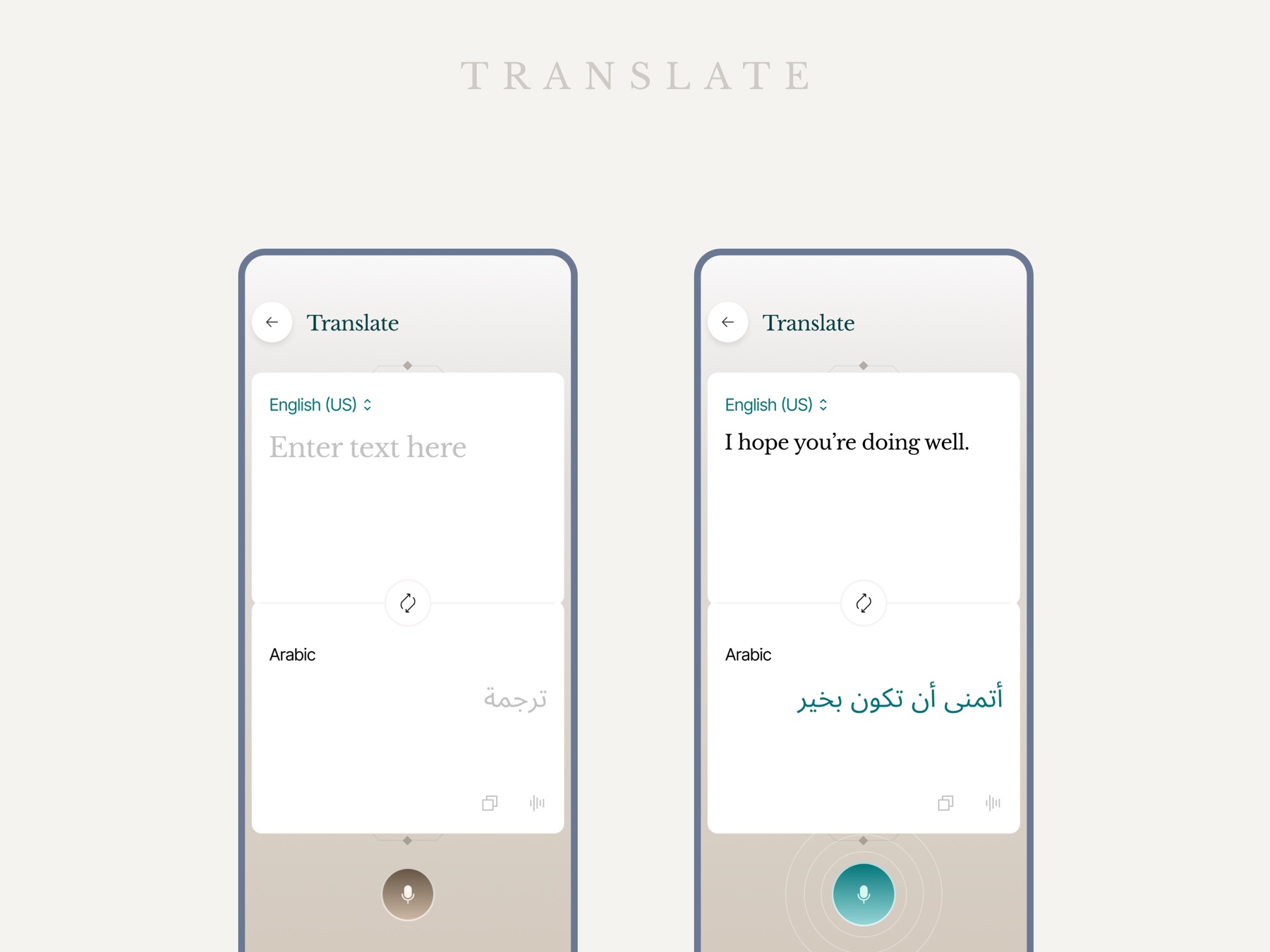
- Live Arabic and English translation, by text or speech
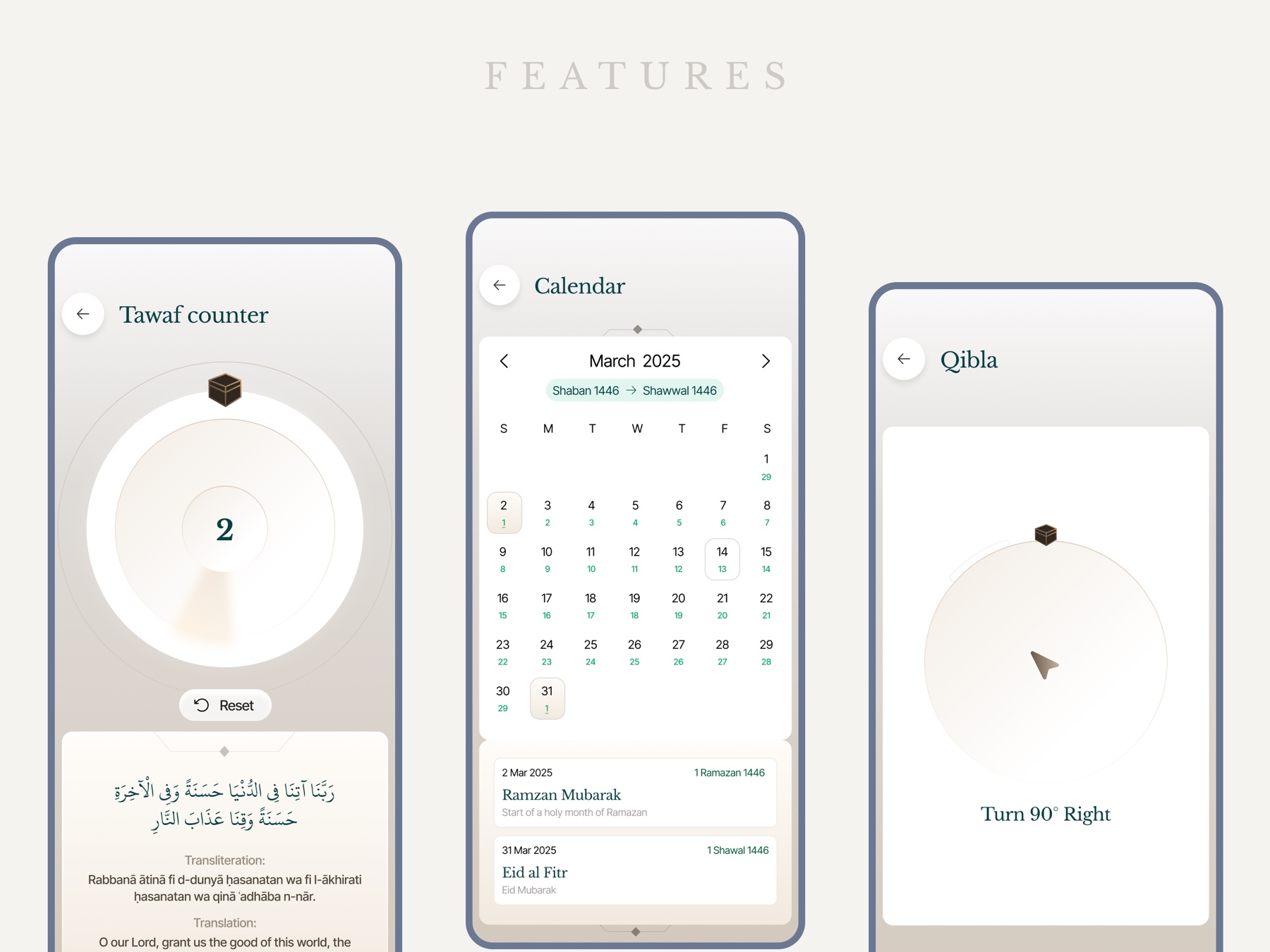
- Tawaf counter with the accompanying du'a, transliteration, and translation
- Qibla compass with a plain-language instruction rather than a bare bearing
- Islamic calendar mapping Hijri to Gregorian dates, with Ramadan and Eid marked
- Hajj and Umrah step-by-step guides, a du'a collection, and a basic-phrases knowledge base
- Emergency services: emergency contacts and telemedicine
outcome
- Live on iOS, Android, and the web
- Two connected products designed end to end: the pilgrim app and the verified-operator app
- Verification designed as a gate operators pass through, so the trust badge means something
- Pilgrimage tools and trusted booking in one place, instead of scattered across apps
built with
iOS, Android, Web, Figma
Ahmed understood that this is a once-in-a-lifetime trip for most of our pilgrims, and he designed like it. The work is careful where it needs to be careful, and simple everywhere else. We are proud of how the app looks and how it feels to use.