ShaalaOS
- client
- In-house product
- role
- Design, AI, Build
- year
- 2026
- live
- visit
School software designed for a Kannada-speaking parent, a mid-range Android phone, and a weak connection, with AI that proposes and a human who approves.
context
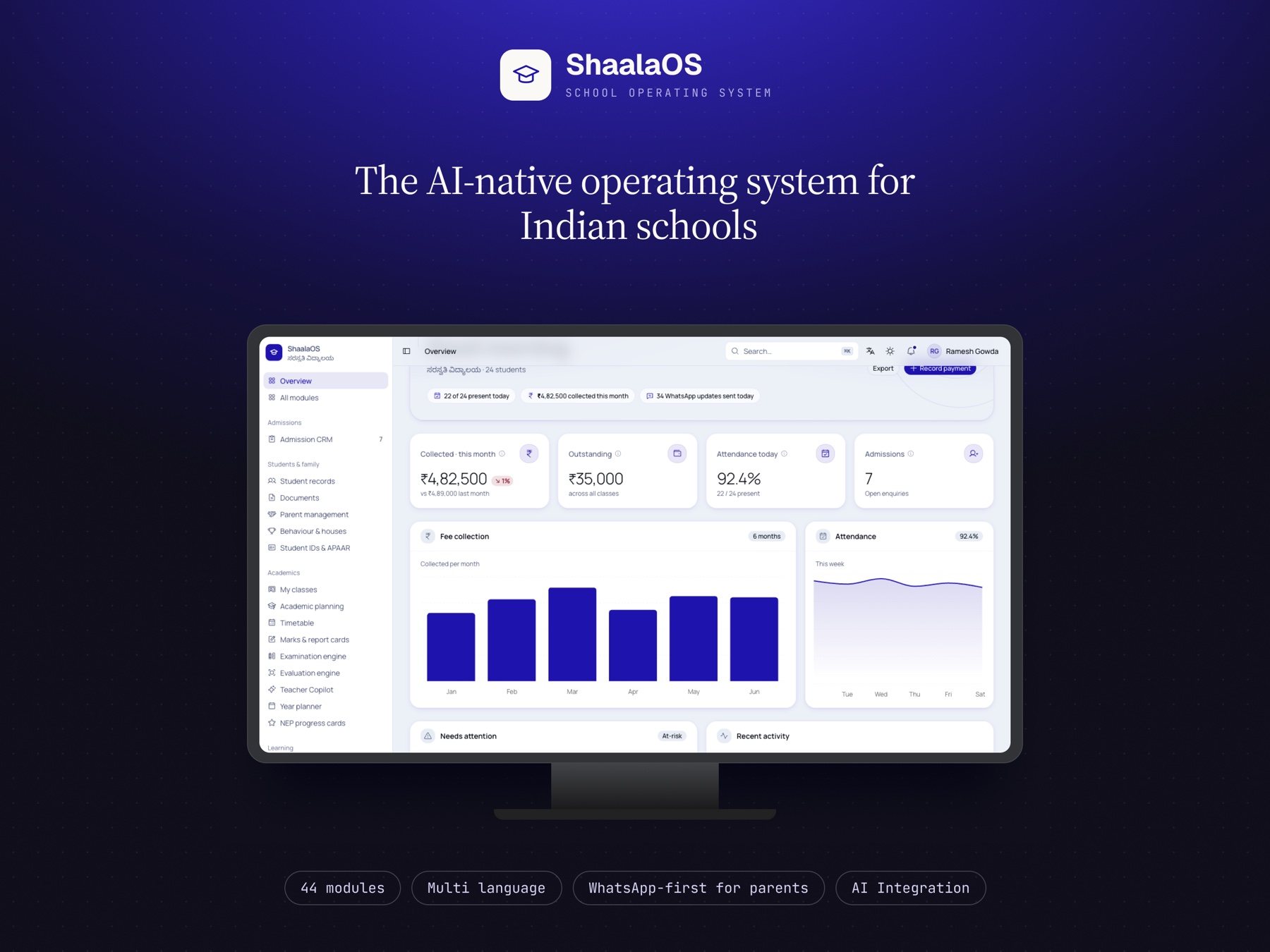
ShaalaOS runs the daily office of a small private school in tier-2 and tier-3 Karnataka. It replaces the paper fee register, the manual attendance book, and English-only tools with one Kannada-first system. The name comes from shaale, the Kannada word for school. The design started from the real user, not the feature list: an office that wants speed, and a parent who speaks Kannada and may not read fluently.
The problem
Small private schools in these towns run on paper. Fees are tracked in ledgers, attendance lives in registers, and parent communication happens by phone call, or not at all. Compliance reports for SATS and UDISE+ are filled out by hand, costing days of staff time each cycle.
The existing school ERPs do not fit. They are English-first, priced for large CBSE chains, and built for a parent who reads English on a smartphone. The real parent here speaks Kannada and may not read fluently. The office wants speed, not features.
Designing for a real day
Before any screens, I mapped the school office's actual daily loop: collect fees, mark attendance, keep parents informed. Everything in the first version serves that loop, and it all has to work on a mid-range Android phone on a weak connection, because that is the device the office actually holds.
- Ship the daily wedge first: fees, attendance, parent updates
- Add compliance next, because that is what makes a school stay
- Add academic tools last
Design principles
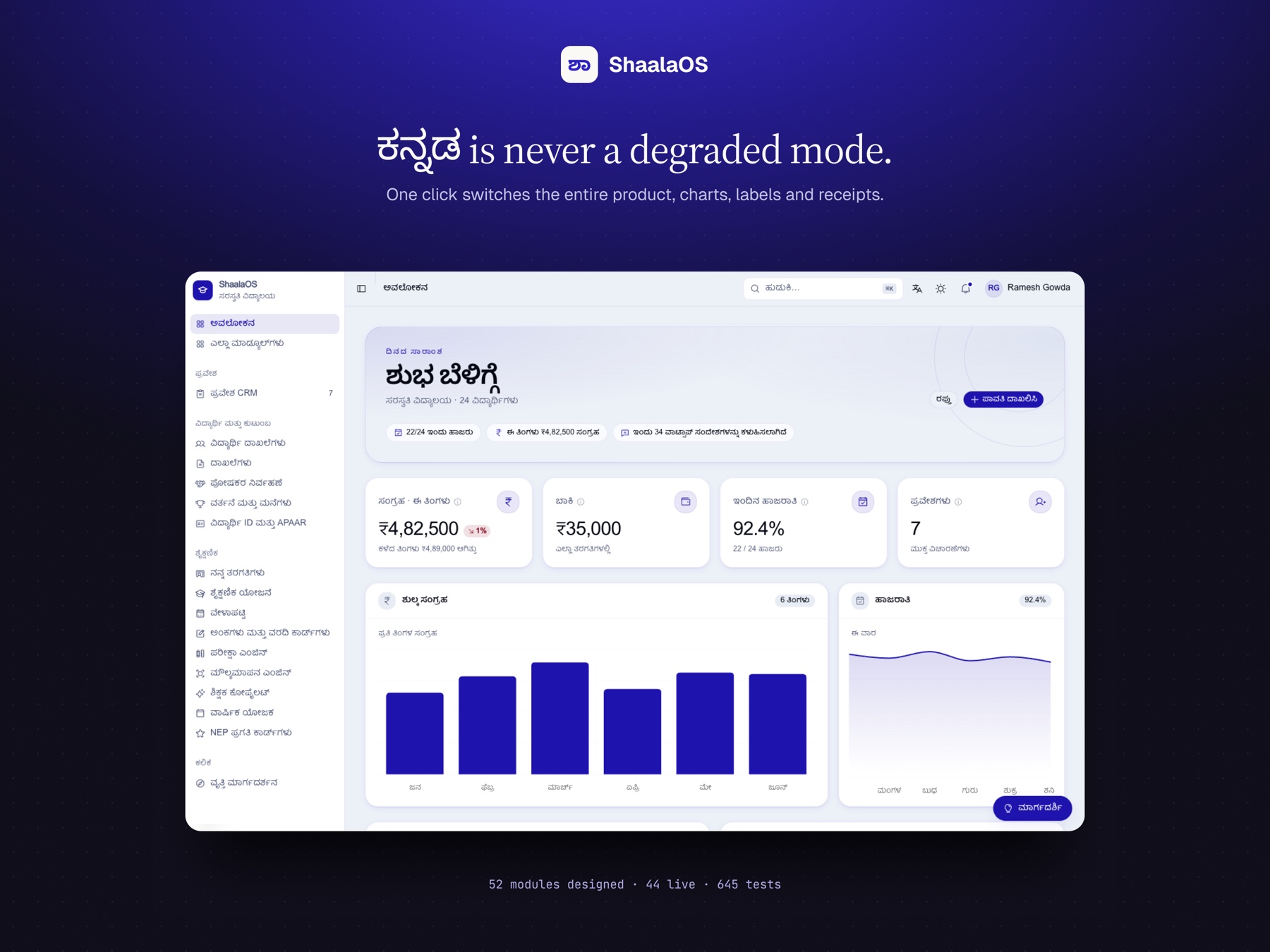
- Kannada first, English second. No user-facing English is hardcoded
- Daily actions never wait on the network. Writes queue locally and replay when the connection returns
- A human confirms anything the AI produces before it becomes official
- Money and attendance edits are logged. Nothing is hard-deleted
- Daily actions respond in under a second
The key interaction: AI proposes, the office approves
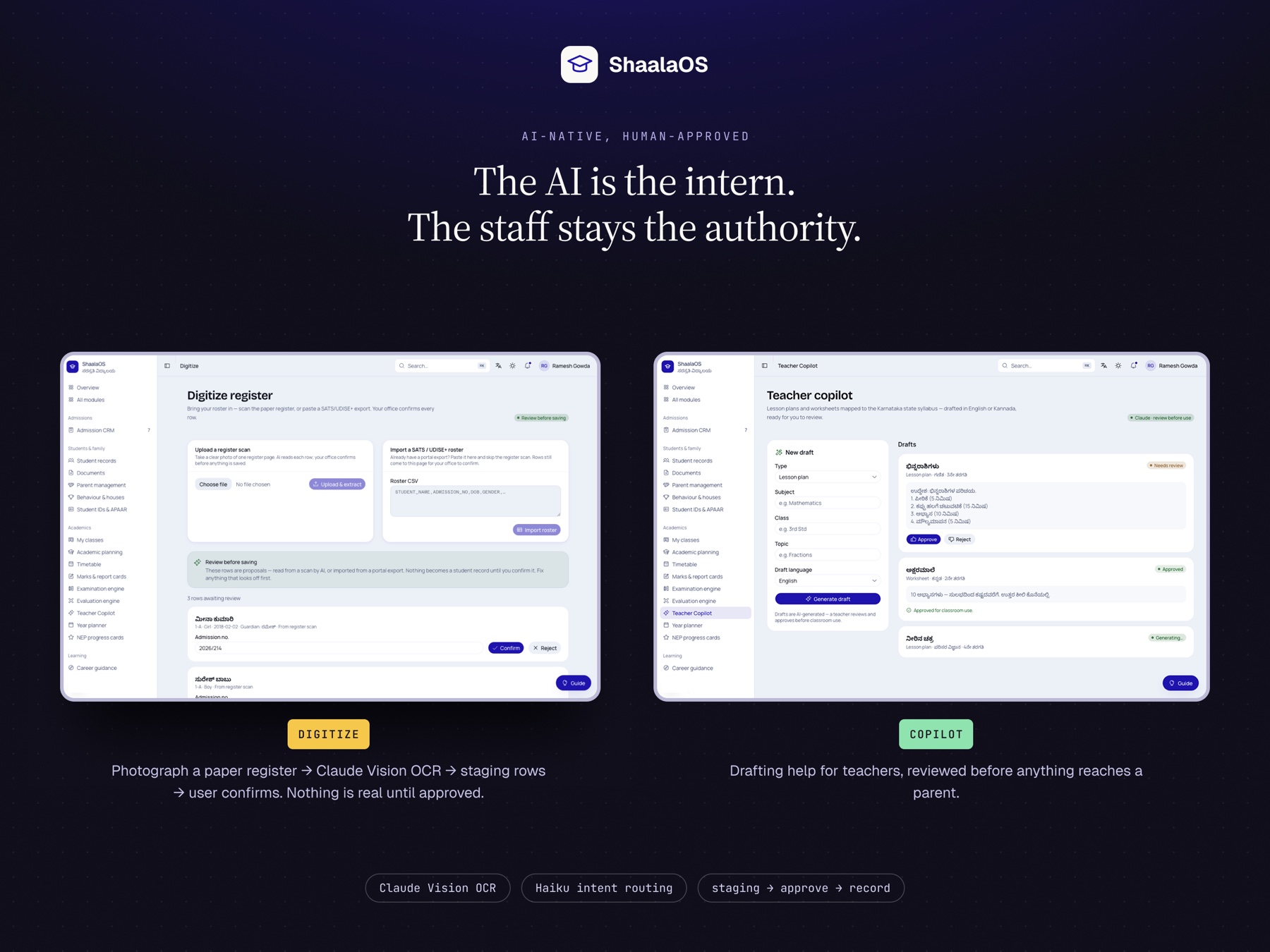
AI exists here to remove data entry, never to make decisions. It digitizes admissions and student records, drafts parent replies, and suggests actions, and every one of them waits for a human tap before it becomes official. In a domain that handles other people's money and children's records, that approval step is the design.
What is inside
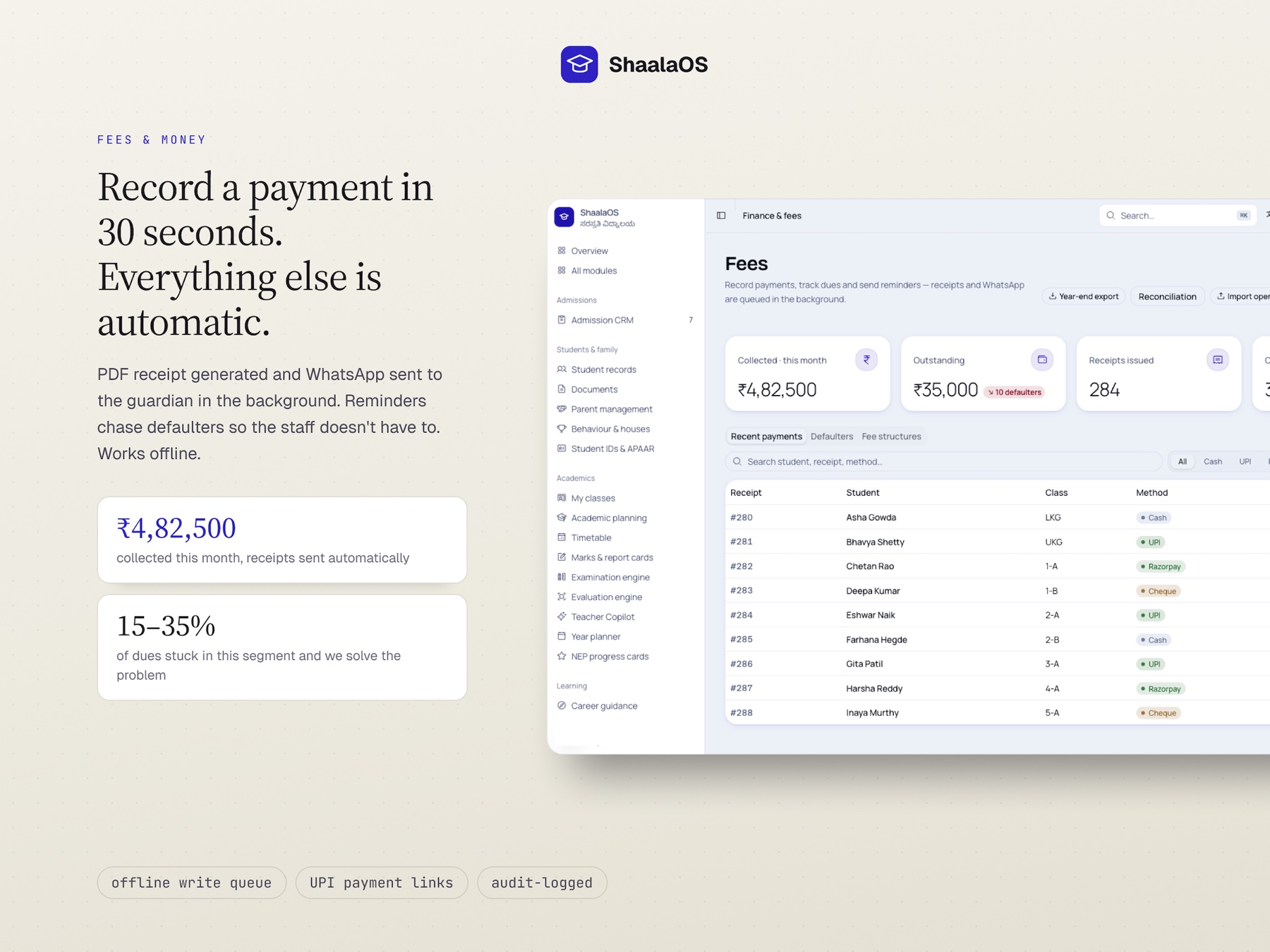
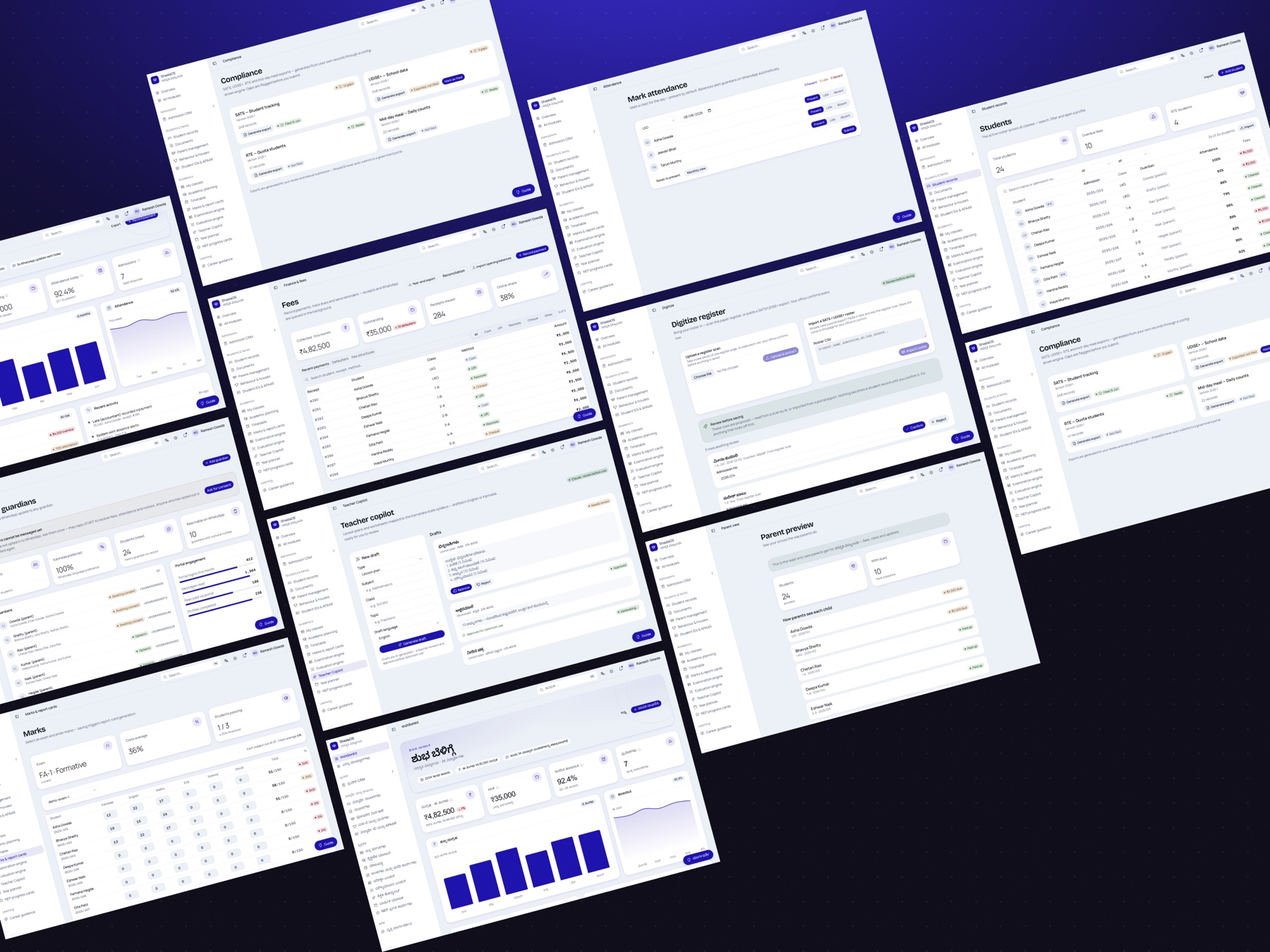
- Fee recording with receipts and automatic reminders
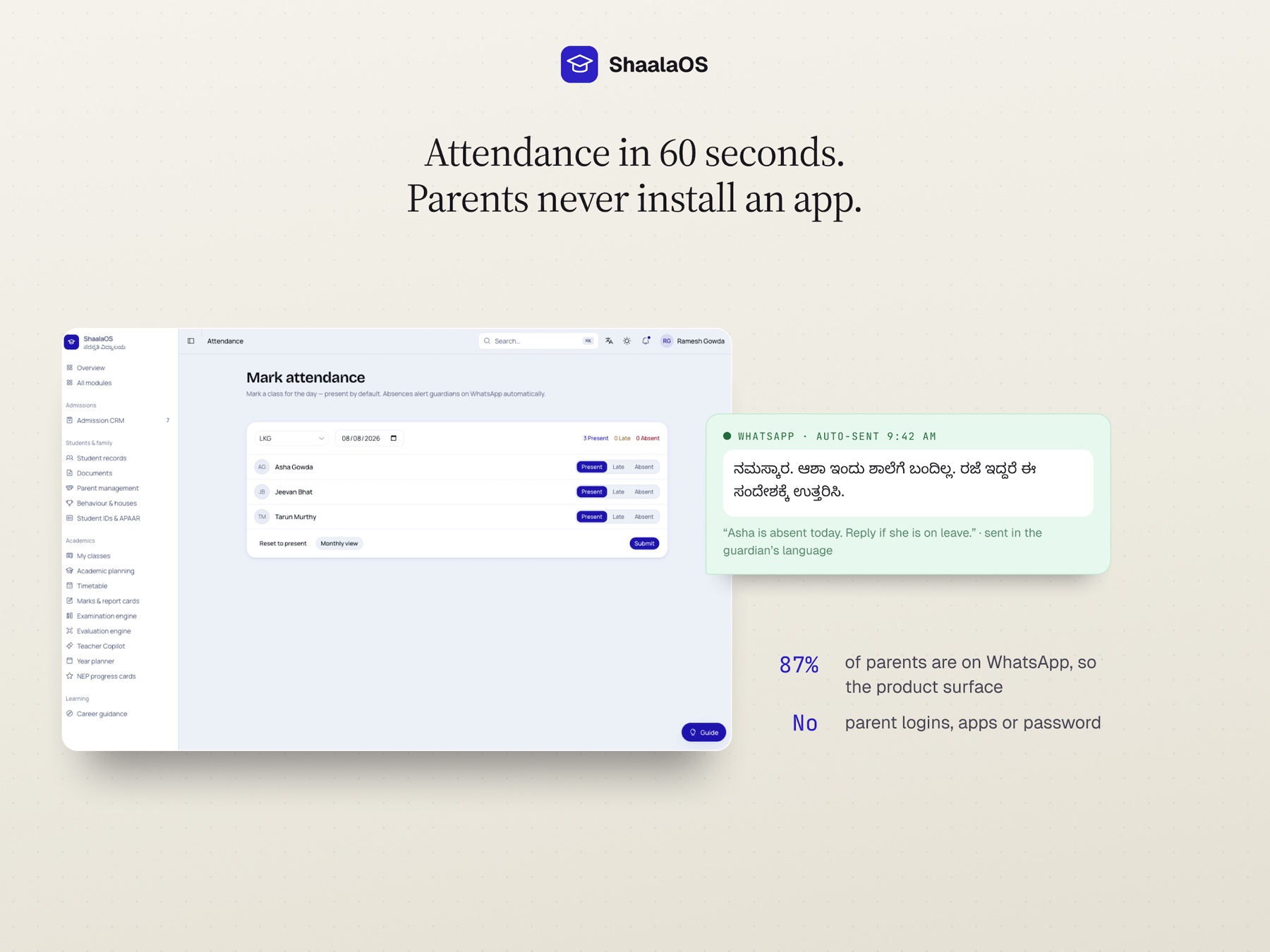
- Class attendance, present by default, with absence alerts to guardians
- Two-way parent queries over WhatsApp in Kannada, by text or voice
- Digitize: photograph a paper register, Claude Vision reads it into staging rows, and nothing becomes a record until the office confirms it
- Teacher Copilot: lesson plans and worksheets mapped to the Karnataka syllabus, drafted in English or Kannada, approved by the teacher before classroom use
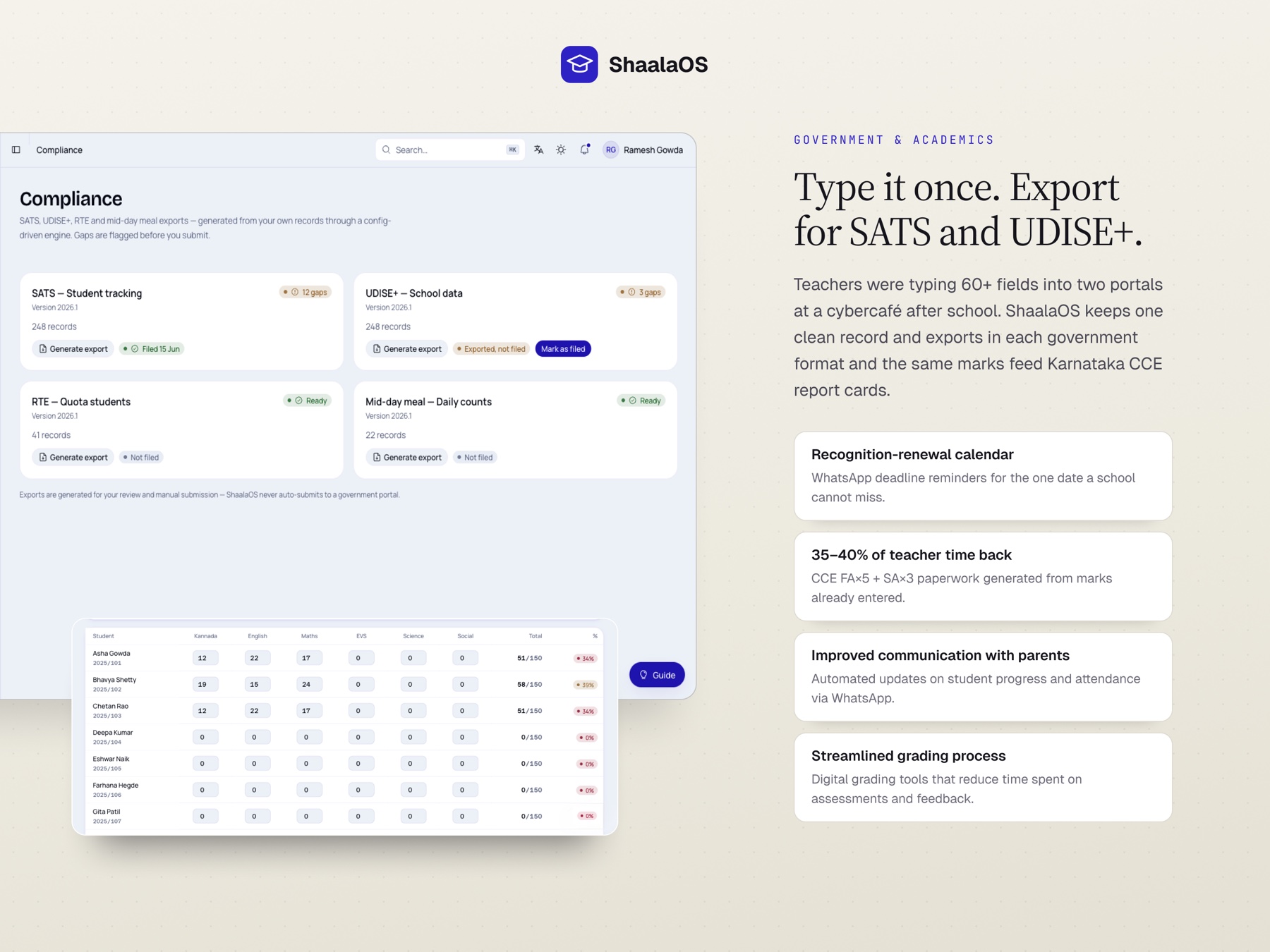
- Compliance exports for SATS, UDISE+, the RTE quota, and mid-day-meal records, generated from records the school already keeps
The pilot
The first deployment was at St Joseph's High School in Hunsur. We started with a focused tool: a teacher leave and substitution app built from the school's real timetable of 20 teachers, 9 classes, and 411 weekly assignments.
A teacher applies for leave from their phone. The system proposes substitutes ranked by subject match and free periods. The principal approves in a tap, and the cover is assigned. It replaced a manual, paper-based process that ate into every morning.
outcome
- 52 modules designed, 44 live, backed by 645 tests
- Teachers get an estimated 35-40% of their paperwork time back, with CCE report cards generated from marks already entered
- Parents need no app, no login, no password: 87% are on WhatsApp, so that is the product surface
- A daily wedge a small school can adopt in a day, proven with real teachers on real schedules
- Built to grow into a full multi-tenant platform without a rebuild
built with
Next.js 15, TypeScript, Supabase, Drizzle, Inngest, Anthropic API, Razorpay